The third lecture in the ReHousIn Lecture Series focused on Vienna, offering an in-depth look at how climate action and housing policy intersect in one of Europe’s most well-known social housing systems.
Delivered by researchers from TU Wien, the lecture explored how Vienna is addressing key green transition challenges – including building decarbonisation, energy retrofitting, densification and nature-based solutions – while seeking to maintain affordability, accessibility and social equity. The session highlighted the city’s unique governance context, where Vienna acts both as a municipality and a federal province, giving it significant influence over housing subsidies and urban planning.
Two case studies formed the core of the lecture. The first examined Innerfavoriten, a dense and socially diverse district undergoing large-scale retrofitting and decarbonisation efforts. Drawing on Vienna’s long tradition of “soft urban renewal,” the case illustrated how climate measures can be implemented alongside strong tenant protection and participation – while also revealing financial, legal and organisational barriers that slow down large-scale transformation.
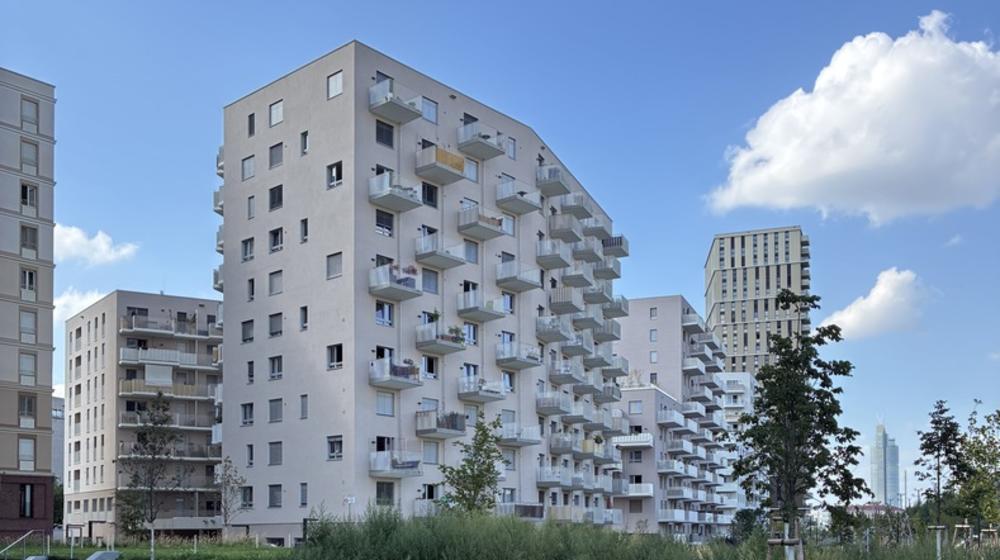
The second case focused on the Nordbahnhof area, a major brownfield redevelopment combining densification with a large central green space. Here, the lecture examined how nature-based solutions and compact urban development can be balanced, and how participatory planning, tenure mix and quality standards play a key role in shaping socially inclusive outcomes.
Overall, the lecture showed that Vienna’s strong housing regulation, object-based subsidies and planning culture provide a solid foundation for aligning climate goals with housing justice. At the same time, it highlighted ongoing challenges – particularly the complexity of retrofitting diverse building stocks and ensuring high-quality green measures within existing legal and administrative frameworks.
The Vienna lecture contributes to ReHousIn’s broader research across nine European countries, offering valuable insights into how the green transition can support – rather than undermine – fair and affordable housing when carefully designed and managed.
Publishing date: