Case study report - Assisi
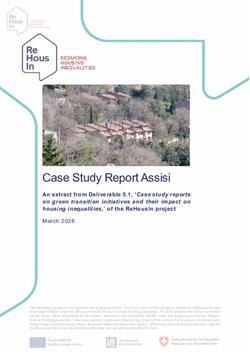
Assisi, a small city in Italy with around 27.400 inhabitants in a vast rural territory (including a natural park), is located in the rather inner and less-urbanised central region of Umbria. The city’s economic focus is (religious) tourism, also driven by a peculiar history of forefront urban planning that preserved the medieval landscape, regulated the transformation of the historic city center and provided a qualified and sound extension of the city. Assisi consists of two main cores: the medieval historic center uphill and the more modern expansions in the plain, mainly the residential neighbourood of Santa Maria degli Angeli, that features some industrial and commercial areas areas, and access to the train and highway networks. The city is somehow functionally organised into two main built areas: the mainly touristic historic center uphill; the center of daily life and housing stock of Santa Maria degli Angeli, including industrial, commercial and tourism infrastructures. Most residents are concentrated in Santa Maria degli Angeli that has seen its population increase in the last years, while the overall municipal population has been decreasing and ageing since 2018. Some smaller and old settlements are in the surrounding agricultural and natural land.
Publication date: